
Herceg Novi
& The Bay of Kotor
Where the Adriatic
becomes a fjord
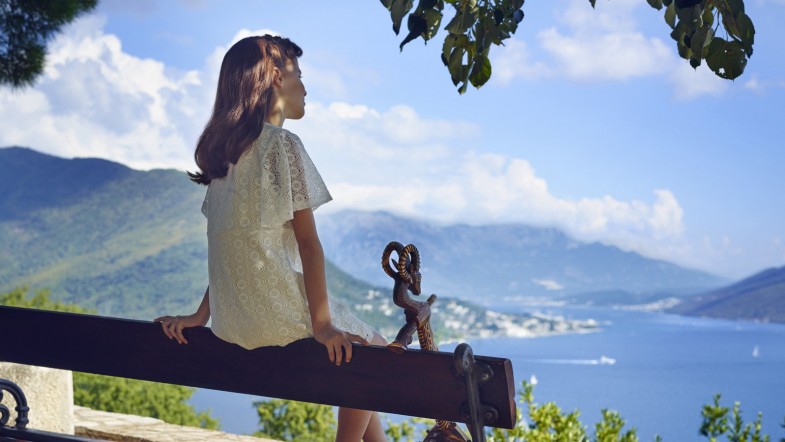
Castel Savina sits at one of the most dramatic points on the Montenegrin coast - the entrance to Boka Bay, where the open Adriatic narrows into a deep, mountain-walled inlet that has drawn sailors, traders and settlers for centuries.
Herceg Novi guards the western mouth of the bay. Meljine, its sunlit suburb to the north-west, climbs the lower slopes of the Savina hillside - the same ground recorded under vine in the 1753 Venetian Land Register, and the home of our winery today.
The city of sun
and stone
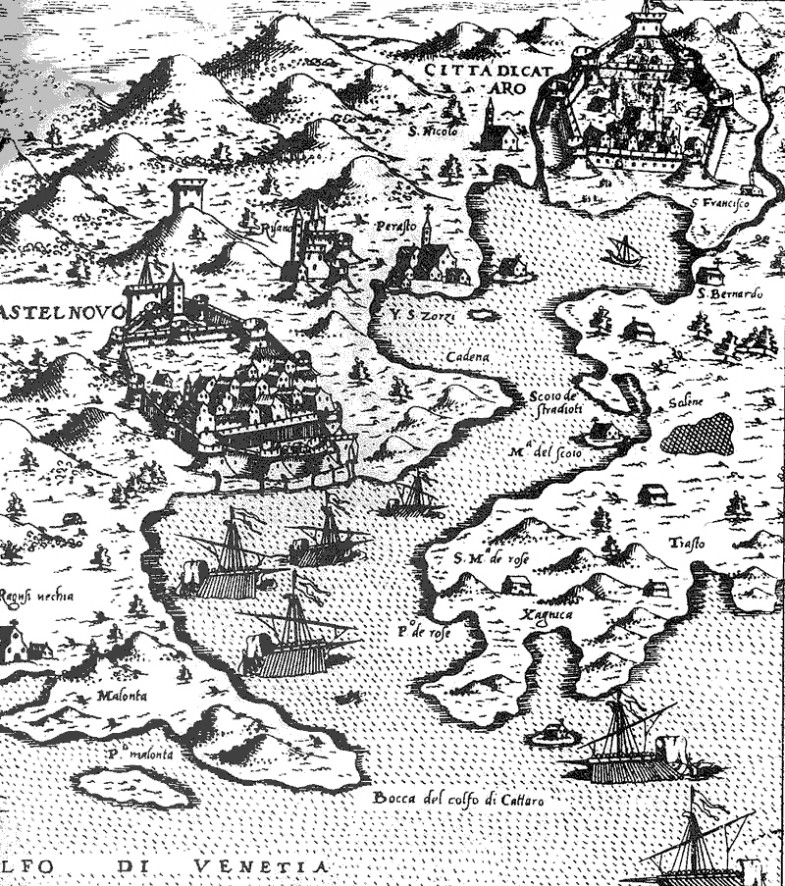
Herceg Novi stands at the north-western corner of the Bay of Kotor, framed by steep limestone hills and facing south across the water. Known locally as the "city of sun," it enjoys one of the sunniest climates on the Adriatic - warm, breezy and intensely Mediterranean.
The town's layered history is written in its fortifications: Venetian bastions, Ottoman towers and Austrian-era gardens sit side by side along the waterfront and up the hillside. Today it is a lively coastal town of terraces, steps and sea views - the natural gateway for anyone exploring Boka Bay.
- Position Entrance to the Bay of Kotor
- Climate Mediterranean, among the sunniest on the coast
- Character Terraced streets, fortresses, sea promenades
The Savina hillside
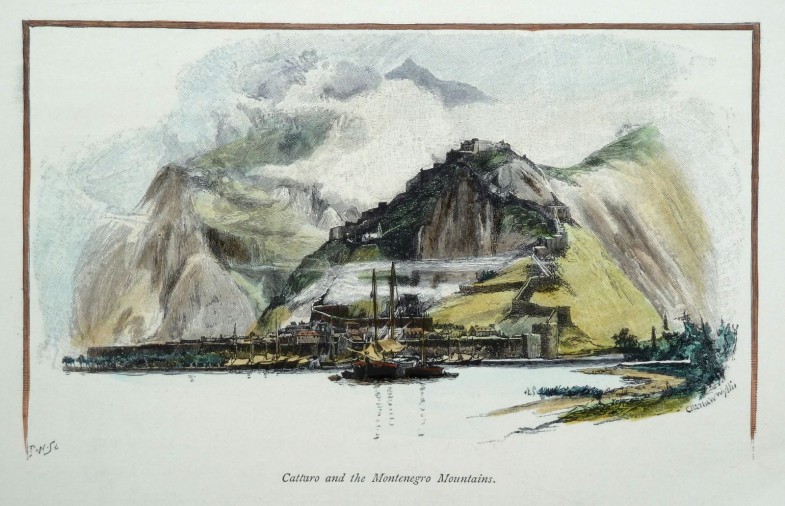
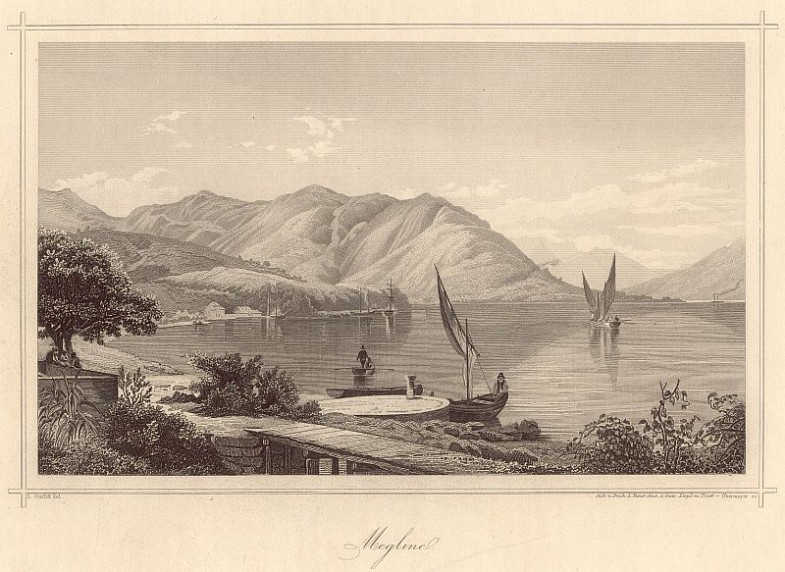
Meljine lies on the western edge of Herceg Novi, climbing from the shore towards the Savina hill. It is a quiet, residential quarter of stone villas, olive groves and gardens - but its name carries weight in the history of this coast.
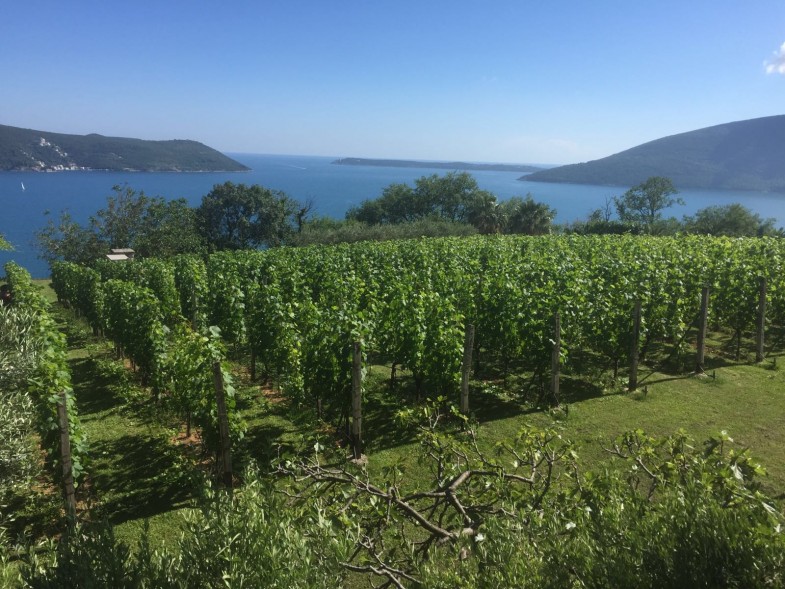
The 1753 Venetian Land Register records the Obradović family estate as Villa di Meljine, with the entire stretch of Savina planted in vineyards. That document - rediscovered centuries later - became the inspiration to restore viticulture to the hillside. Castel Savina now occupies the same south-facing slope, between 70 and 120 metres above the sea.
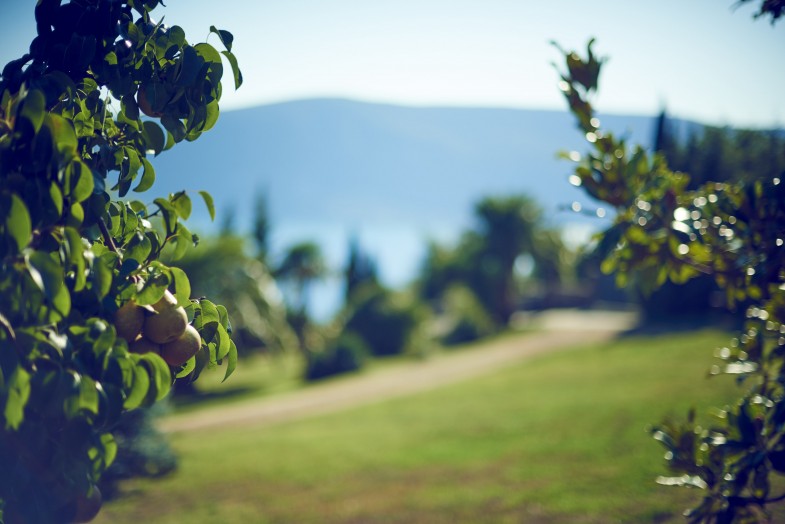
From Meljine, the view opens across the full width of the bay: Perast and the islands to the south-east, the mountains of Orjen behind, and the open Adriatic beyond the western headland.
A landmark above the bay
The Savina Monastery - Manastir Savina - rises on the hill above Meljine, a few minutes from the Castel Savina estate. The monastery and the hillside share a name, and a long history on this coast.
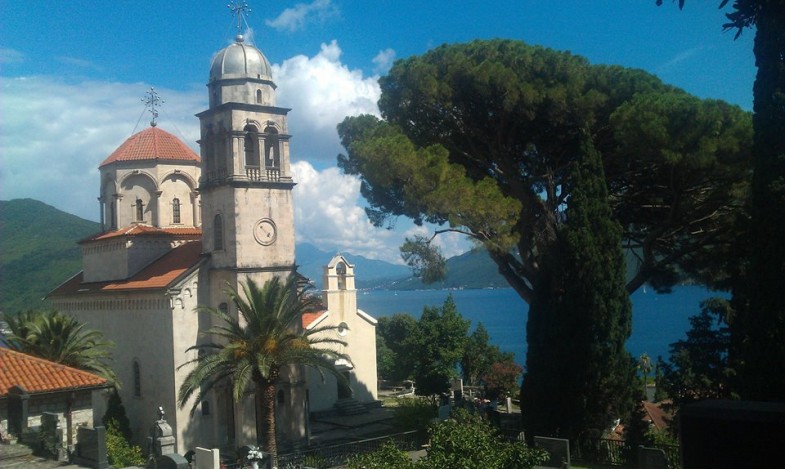
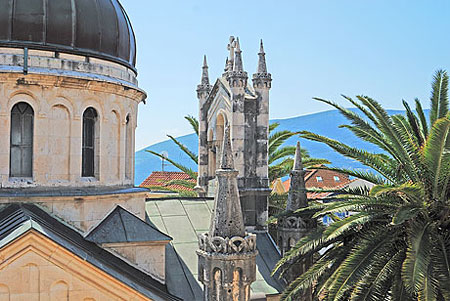
Founded in the 11th century, Savina Monastery is one of the most important Orthodox monasteries on the Montenegrin coast. Its stone churches, red-tiled roofs and silver domes are visible from across the bay - a fixed point in a landscape that has changed little in its essentials for centuries.
The name Savina refers to the service tree - the sorb or rowan - that once covered the hillside. The monastery cemetery, cypress trees and Mediterranean garden create an atmosphere of stillness just above the bustle of the coast.
The coast from Savina
Experience the region
from the estate
Our tours begin with the story of Castel Savina and continue through the vineyard and cellar - with views across Meljine and the bay at every turn. Reservations required.
Book a Tasting